Melon

Scoring method

How the Melon Score works.

Melon scores products out of 100 using a rule-based method. The score combines nutrition, additives, naturalness, processing, category exceptions, and final score caps.

Rule-based100-point scoreNutrition + additives + processing
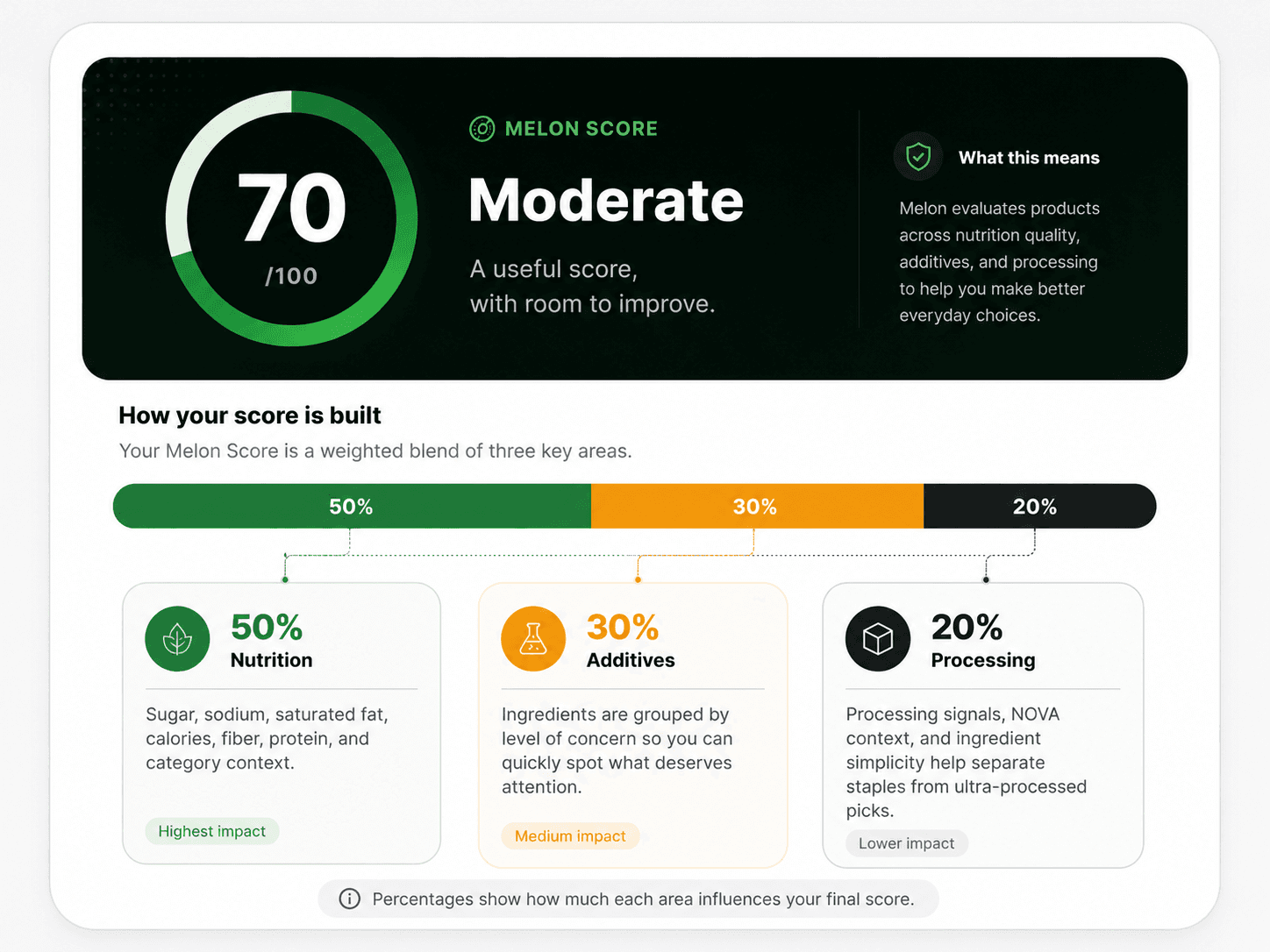
Melon Score graphic explaining a 70 out of 100 moderate score and the nutrition, additives, and processing weighting

100 points

Three areas build the final score.

Nutrition can add or subtract meaningful points, additives are penalized by severity, and naturalness or processing helps Melon separate simpler foods from ultra-processed products.

40

Nutrition

Sugar, sodium, saturated fat, calories, protein, fiber, and whole-food signals shape the nutrition portion of the score.

30

Additives

Additives start at full credit, then lose points based on the number and severity of caution or avoid additives.

30

Naturalness / Processing

NOVA level, ingredient count, oils, artificial flavors or colors, gums, emulsifiers, and other processing signals are evaluated together.

Nutrition

The nutrition score starts with a baseline and moves from there.

Most products start with a base nutrition score, then Melon adds points for stronger nutrition signals and subtracts points for concerns that shoppers commonly care about.

Can add points

  • Fiber
  • Protein
  • Whole-food base
  • Low sugar
  • Lower sodium

Can subtract points

  • Higher sugar
  • Higher sodium
  • Saturated fat
  • High calories with low protein and fiber

Additives and processing

The score looks beyond calories and macros.

Additives start at 30 points and lose points based on caution or avoid signals. Processing starts from the NOVA group and is adjusted for ingredient complexity and processing markers.

NOVA group
Ingredient count
Seed oil signals
Artificial flavor or color
Gums, emulsifiers, lecithins
Mostly sugar-based products

Score labels and caps

A good-looking label cannot hide important concerns.

After the category scores are added, Melon applies final caps when certain signals should limit the maximum score. This keeps high-risk additives or heavy processing from being masked by one strong nutrition metric.

How to read the score

90-100

Excellent

75-89

Good

50-74

Moderate

25-49

Poor

0-24

Avoid Often

Final caps

  • One or more avoid additives can cap a product at 49.
  • Two or more avoid additives can cap a product at 39.
  • NOVA group 4 products can be capped at 49.
  • Soda, cola, candy, energy drinks, and chips are handled with stricter caps.

Special cases

Some foods need fairer context.

Melon includes special handling for categories where ordinary nutrition scoring can be misleading, and it keeps personal preferences separate from the core product score.

Water is scored differently so it is not punished for having no protein, fiber, calories, or vitamins.

Plain tea and coffee receive special handling because missing nutrition data should not make simple products look unhealthy.

User preferences such as halal, kosher, vegan, vegetarian, and allergies are shown as personal flags, not hidden inside the Melon Score.